
Some things in life work against each other like chalk and cheese, whilst others move differently and are a match made in heaven.
Let’s look at this musically.
Take the boys of Apollonia as an example. A perfect collaboration of musical minds. Apollonia forms a collective that fits. On the flip side, you would not want to witness a Villalobos b2b Michael Bibi showcase, as the two work great in their genres but would be a musical car crash blend.
Where am I going with this?
A minority number of topics can be quite taboo in the dance music industry and an expression of openness scarce. In this feature, I delve into the complex but googly-eyed relationship between Ecstasy and dance music!
Looking back to the inception of the rave scene, and the components that made the experience, drugs were and still are an omnipresent force within the culture of dance music: at almost every event or venue, it is possible–and, in many cases, super-easy to find a wide variety of experience-enhancing substances available for purchase.
Picture the scene and that initial journey of discovery. The shifty move to the back of the dancefloor. Moving the sunglasses over the eyes and looking for anyone remotely shady or ‘high’ to ask in a dulcet toned voice.. ‘got any pills’?
In many ways, the use of these substances has substantially shaped the evolution of the subculture. In some cases, the inverse is true.
So, let us look at a few questions around this topic and explore the budding love affair between Ecstasy and electronic music.

What is the history of the drug?
How was it introduced into the dance music scene?
Why is the substance so popular amongst the raving community?
How did Ecstasy put the ‘e’ in rave?
The use of the drug in the rave throws back many years. The initial roots of the substance trace back further than you would think.
Like most other drugs that come from labs rather than leaves, MDMA was first a Cold War by-product. In the early ’50s five decades after German chemists patented and then briskly forgot about Methylenedioxymethamphetamine. The United States armed forces then began researching psychotropic MDMA, LSD, and other drugs for use in manipulation tactics and exploring suspected enemy minds. Interrogation.
The real godfather of the drug, though, is a man named Alexander “Sasha” Shulgin. Shulgin was a quirky psychopharmacologist educated at Harvard who began synthesising and self-testing MDMA at his California home.
“Sasha” gave MDMA a ringing scientific endorsement. A few years later, it started showing up in Dallas queer clubs. The initial nickname “Adam.” was given. This dance club drug introduction is linked to the early ’80s, and DJs were beginning to understand the capacity of the synthesiser to vibrate and envigorate its audience.
The music and the powder (initial form) travelled quickly and in tandem, oozing into the mainstream. Every notable place to dance soon became a place to vibe. The Chicago nightclub ‘Warehouse’, a centrepiece of the city’s MDMA scene, birthed the term “house music.” We can not corroborate that this is the exact way that house music as a genre was born but it is a highly logical explanation.
By the summer of 1985, the government classified MDMA as a Schedule 1 Controlled Substance – those with high abuse potential, no accepted medical function, and a possible 10 – 15 year stretch for possession. Ouch. Adam was now Ecstasy, and both the dance music and club experience had grown exponentially fast. In the chicken-or-egg question of causality, most point to the buzz.
“[It] was an intentionally designed experience,” media theorist Dr Douglas Rushkoff writes in his book ‘e’, the incredibly strange history of Ecstacy. “The music, lighting, and ambience were all fine-tuned to elicit and augment altered states of consciousness. The rhythm of the music was precisely 120 beats per minute, the frequency of the fetal heart rate, and the same beat believed to be used by South American shamans to bring their tribes into a trance state… Rave dancers sought to reach group consciousness on a level they had never experienced before.”
Popularity amongst the raving community increased at a rapid rate.
MDMA became extremely popular at raves because the suppliers and distributors of the drug have found that raves are an easy target for making mass sales. It quickly escalated into becoming the number one drug of choice for people who attend such raves, festivals, concerts, and nightclubs.

Euphoric Feels – The Science:
Ecstasy increases the activity of the neurotransmitters in an individual’s brain, the result is the rush of feelings of energy and euphoria. Clever marketing played a crucial role in the initial spread.
MDMA is commonly pushed as a substance that allowed people to “dance all night,” which, with the popularity of fast-paced, electronic music, became wonderfully enticing to the raving community.
In addition to feelings of excessive energy and euphoria, users of the now-named ‘Mandy’ also experience what they consider to be “pleasant” distortions of vision, hearing, and orientation to place and time. The result leaves them feeling as though they are in a dream-like state.
Users also feel heightened levels of sensuality, causing them to develop an instant and emotional bond with those around them.
It is also said to cause arousal of sensory perceptions, resulting in an ability to hear music in sharper tones. This suggests that it enhances an individual’s overall “party experience.”
The drug and the music evolved together over the years, making electronic music a radically different culture today than when it started.
Has an over-dependence on drugs at a rave become an issue? That is open to debate.
There are now a variety of Ecstasy forms. Pills, powder and the more contemporary choice – crystals are all readily available at a relatively insignificant cost.
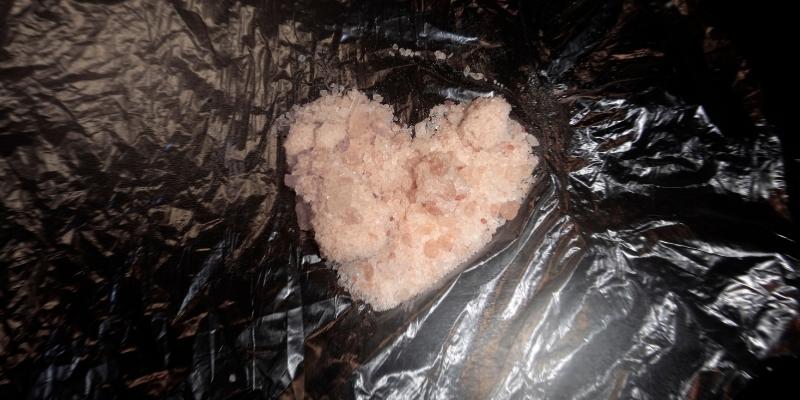
The Romance
The love affair between substance and rave is easy to relate to due to the perceived harmonious coupling and scientific effects. Think of all the great pairings in the world – Torvill and Dean, Bacon, lettuce & tomato or even Wallace and Gromit. They all share a common theme, they work together. Their vibe is the same.
Gazing back, with wondering eyes, to the hippie era of the 1960s. The slogan, “peace, love, sex, drugs and rock and roll” has only been replaced, in the modern format, switching ‘rock and roll’ with rave.
There is often a sense of unity and solidarity at a rave. This link is easily attributed to the use of Ecstasy in close relation with them. From a safety standpoint, raves have historically been targeted as toxic, with massive drug consumption and unsafe sex practices. It can be argued that, from a cultural viewpoint, raves are a “safe space” for youth culture to gather and find a place to belong.
The effects of MDMA lead the drug to the forefront of PLUR (peace, love, unity and respect) raver culture, but it is not the only way that rave attendees form bonds with each other.
Light shows are frequently a rave experience addition. During a light show, one person may take small handheld lights, or put on gloves with lights on the fingertips and wave them rapidly in complex motions and shapes in front of another person’s face.
MDMA increases sensitivity and appreciation of light and colour. The dilation of pupils allows more light to reach the lens. This proven fact offers evidence as to why lighting has become more advanced and a constant presence.
The electronic music played at raves is tailor-made to those under the effects of Ecstasy.
Many producers of dance music will layer white noise. A track will initially begin at a low pitch with volume gradually rising. The aim is to try and garner a positive reaction from the crowd and heighten the experience.
Ok, I have hit you with a minefield of information and connected the dots within the blurred lines of a previously secretive relationship. One thing is for sure, Ecstasy has always had romantic liaisons with rave culture and shows no signs of an imminent and heart-wrenching breakup.
As with every illegal substance, it is only responsible to mention the risks that ride along with the participation of drug use. We need to appease HR and talk openly about safety issues.














![Inside Five: Endor [Ruff Cutz Records]](https://www.mrafterparty.com/wp-content/uploads/2023/07/Web-Featured-Image-Template-2-380x213.jpg)
![Inside Five: Endor [Ruff Cutz Records]](https://www.mrafterparty.com/wp-content/uploads/2023/07/Web-Featured-Image-Template-2-100x100.jpg)
