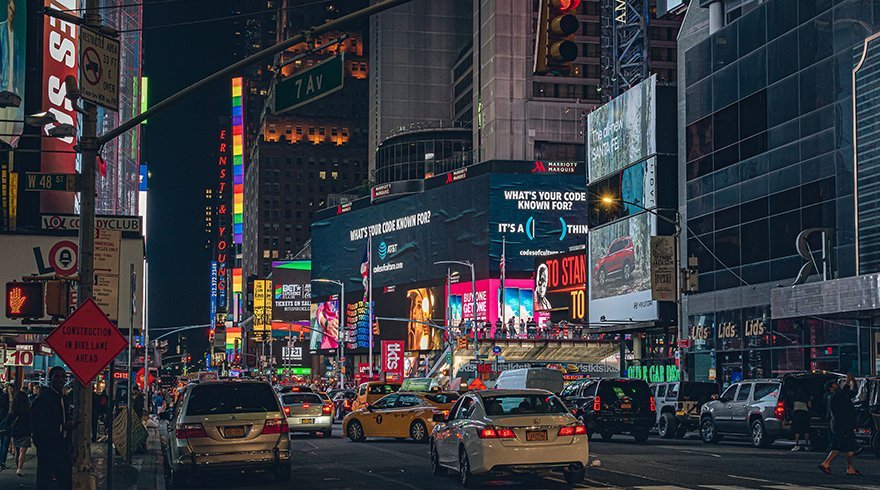
A new proposal has been suggested to create 24-hour “nightlife districts” in New York City, akin to the similar districts in European cities Amsterdam and Berlin.
The idea is to help give businesses a boost after a challenging year that led to enforced closures for businesses across the nightlife sector. At the moment, New York’s licensing rules restrict alcohol from being sold at venues past 4 am.
The proposal was put forward as part of the NYC Mayors Office For Nightlife Report 2018-2021.
New York’s night czar equivalent Ariel Paltiz has been at the forefront of championing these suggested changes; she said:
“Everything is on the table right now. We are recommending this as a pilot to identify areas where 24-hour use might be appropriate; new licenses that are committed to hosting community programming in exchange for this allowance in certain areas have proved wildly successful.”
Also, further to it being a way to stimulate the economy and breathe some life back into the nightlife industry, this approach would be a safer way to have a steady flow of traffic than patrons leaving bars, clubs, and other establishments 4 am closing time.
Ariel Palitz went on to say: “Allowing 24-hour use in specified districts, if implemented properly, can help people to move at their own pace and reduce conflicts.”
Some are opposing the idea. New York City has seen a recent rise in crime rate, with city police failing to shut down or reduce the rise in illegal after-hours parties in hotspot districts like Washington Square Park and Hell Square in the Lower East Side.
A senior fellow from Manhattan Institute, Nicole Gelinas, who is overseeing a think tank on urban policy, believes a 24-hour district will only make matters worse, she said;
“The city already has trouble policing disorder. Now think about the unique challenges of trying to police a place where people behave in a way they wouldn’t behave at home. You have to wonder if New York City is up to the challenge.”
Ariel Palitz’s team believe if approached in the right way, such concerns can be allayed;
“recommends identifying potential areas with low residential density where a limited 24-hour program might be tested, allowing late-night activity to operate free from nuisance complaints or other conflicts.”
Venues have been able to open at full capacity since May 2021; attendees must prove they are fully vaccinated. However, from June, those measures were relaxed for venues with under 5,000 capacity.













![Inside Five: Endor [Ruff Cutz Records]](https://www.mrafterparty.com/wp-content/uploads/2023/07/Web-Featured-Image-Template-2-380x213.jpg)
![Inside Five: Endor [Ruff Cutz Records]](https://www.mrafterparty.com/wp-content/uploads/2023/07/Web-Featured-Image-Template-2-100x100.jpg)
